Complete Career Resource · 2026
How to Become a Licensed
Plumber in the United States
Everything you need to understand the plumbing career path in America — license requirements, salary data, regional demand, and how the AI infrastructure boom is creating the largest skilled trade shortage in U.S. history.
The Big Picture
Why 2026 Is the Most Important
Year to Enter the Plumbing Trade
Three independent forces are converging simultaneously to create the most favorable labor market for plumbers in American history. Understanding each one helps explain why the window of opportunity is real, time-sensitive, and backed by hard data.
Force 1: AI Is Eliminating White-Collar Work
Artificial intelligence can now perform legal research, write software, analyze financial data, and draft marketing copy. Entry-level jobs in law, finance, tech, and media are disappearing faster than at any point in history. A 2025 Brookings Institute study found that more than 30% of U.S. workers could see at least 50% of their tasks disrupted by generative AI within five years. Plumbing is categorically immune to this disruption. The physical, spatial, and judgment-based nature of the work — navigating unique buildings, adapting to unexpected conditions, working with tools in confined spaces — remains beyond the reach of current or near-future AI systems.
Force 2: The AI Infrastructure Boom
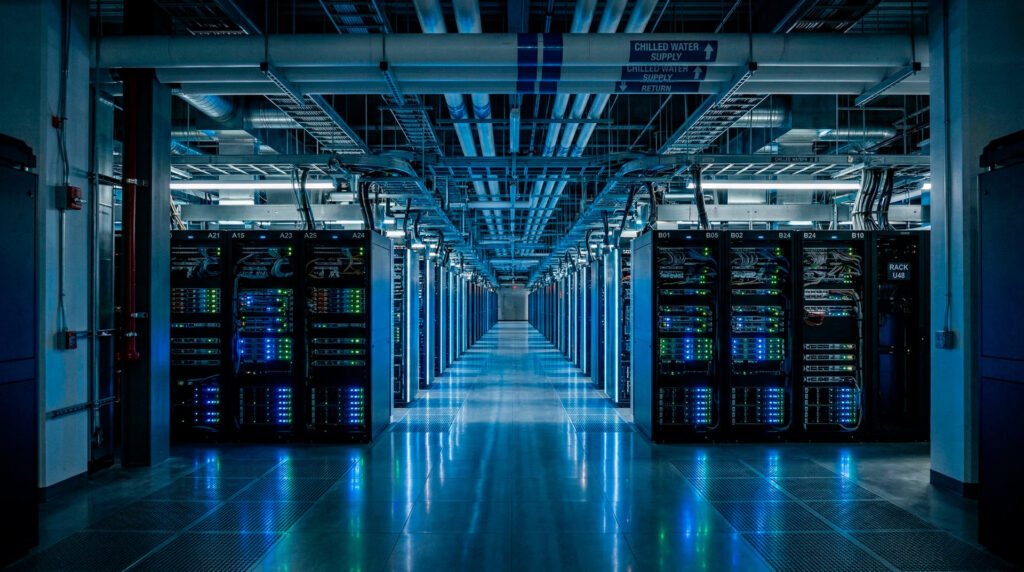
Ironically, the same AI that threatens office jobs is creating massive demand for plumbers. Every AI data center — the physical buildings that house the servers running ChatGPT, Gemini, and thousands of other AI systems — requires extensive plumbing infrastructure: chilled water cooling loops, cooling towers, liquid cooling systems, fire suppression, and more. The United States invested $77.7 billion in data center construction in 2025 alone — a 190% increase compared to 2023. The OpenAI/SoftBank/Oracle Stargate Project alone represents a $500 billion commitment. TSMC's semiconductor plant in Phoenix adds $165 billion more. Every one of these facilities requires thousands of licensed plumbers and pipefitters to build.
Force 3: The Retirement Cliff
The average plumber in the United States is over 40 years old. According to NCCER data, 41% of the entire construction workforce will retire by 2031. The industry is losing experienced workers faster than new apprentices can replace them — and it takes approximately 5 years to train a Journeyman plumber. This demographic reality means the supply shortage will worsen every year for the foreseeable future, regardless of economic conditions. The Bureau of Labor Statistics projects 44,000 annual job openings for plumbers through 2033 — the majority resulting from retirements, not new positions. Combined with the AI infrastructure demand, the net result is a projected shortage of 550,000 licensed plumbers by 2027.
Technical Explanation
Why AI Data Centers Create
Massive Demand for Plumbers
Most people are surprised to learn how much plumbing exists inside an AI data center. The connection is not obvious — but once understood, it explains why plumbers are increasingly described as the most critical skilled trade of the AI era.
The Heat Problem
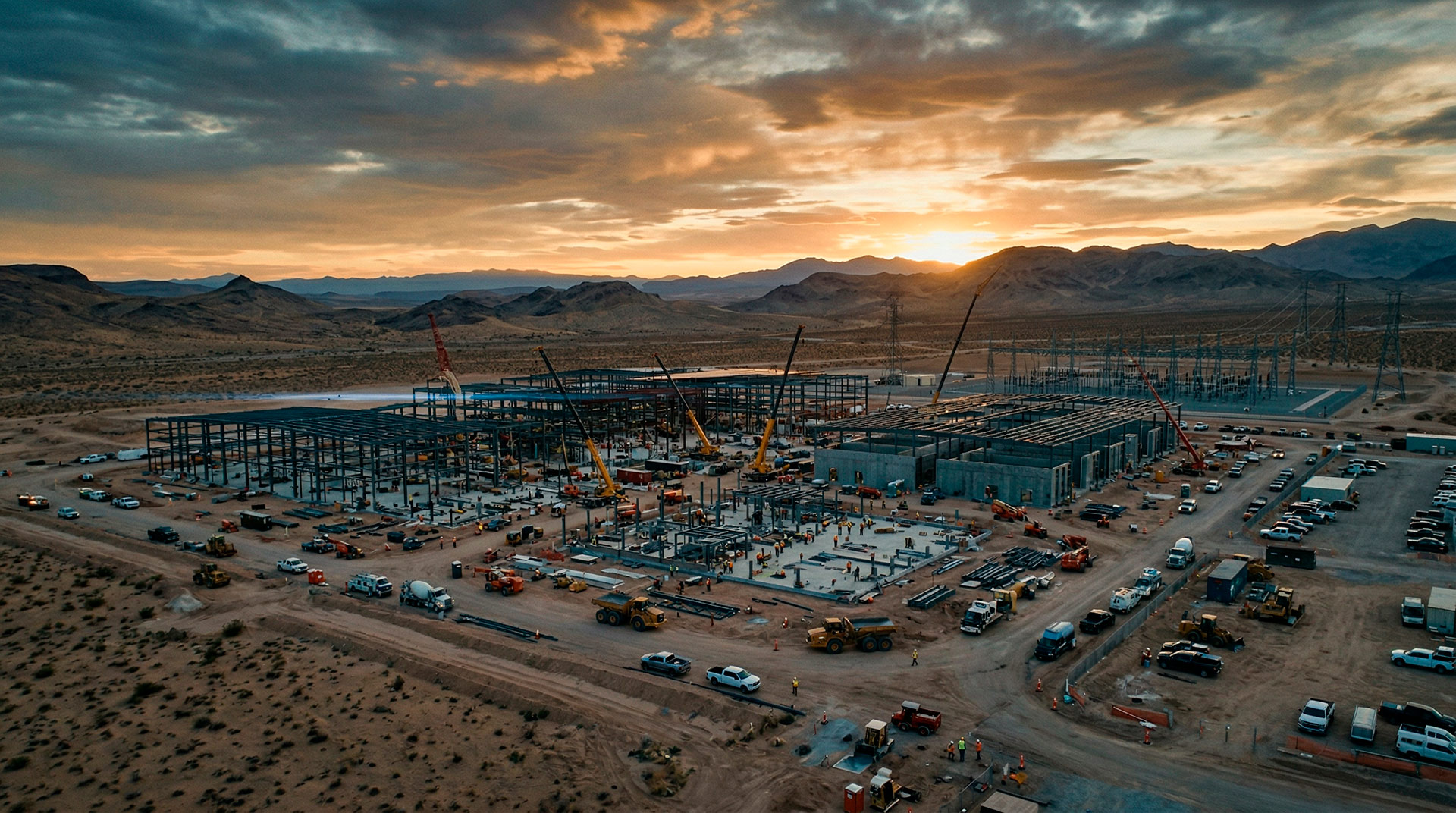
Modern AI chips — like Nvidia's H100 and H200 GPUs — consume between 300 and 700 watts each. A single server rack holds dozens of these chips. A data center holds thousands of racks. The heat generated is equivalent to a small power plant, operating 24 hours a day, 365 days a year, in a building that cannot have windows open.
If this heat is not managed precisely, chips fail within minutes. A cooling system failure in a hyperscale data center can destroy millions of dollars in equipment and disrupt services used by millions of people worldwide. This is why cooling infrastructure is not optional — it is the most critical mechanical system in the building.
The Water Solution
Water is the most efficient medium for removing large amounts of heat. A modern hyperscale data center uses multiple water-based systems simultaneously — each requiring licensed plumbers to install, maintain, and repair.
Plumbing Systems Inside a Data Center
Large-diameter insulated pipes circulate chilled water (typically 45–55°F) throughout the facility. The water absorbs heat from air handling units and returns to chillers for re-cooling. A single facility may contain miles of these pipes.
Water that has absorbed heat is pumped to rooftop towers where it releases heat into the atmosphere. These systems require complex pipework, valves, and controls — all plumber-installed.
The newest AI chips run so hot that air cooling is insufficient. DLC systems route water through cold plates directly touching each processor. This requires precision pipework — and specialized, highly paid plumbers.
Every data center requires comprehensive sprinkler and gas suppression systems — entirely installed and maintained by licensed plumbers and fire suppression specialists.
Large data centers house hundreds of employees and require standard commercial plumbing throughout — at industrial scale.
"The data center space will be the first time when we've had highly compensated, high-skilled trades workers physically working next to network engineers who have college degrees." — Industry expert quoted in CNBC, March 2026
Career Path
The 3 License Levels:
A Complete Breakdown
The U.S. plumbing career follows a structured three-level progression. The specific requirements vary by state, but the framework is consistent across most jurisdictions. Understanding each level helps you plan your timeline and income expectations.
Apprentice Plumber
The entry point requires no prior experience — just a high school diploma or GED. You work under the supervision of a licensed Journeyman or Master Plumber, completing a combination of on-the-job training and classroom instruction. In most states you must register as an apprentice with the state licensing board before beginning work.
The best pathway is through the United Association of Plumbers and Pipefitters (UA), which operates 5-year apprenticeship programs combining paid work with evening classes. Some states allow direct employment with a plumbing company as an alternative.
- ✓ High school diploma or GED
- ✓ Register with state licensing board (most states)
- ✓ Work under licensed supervision at all times
- ✓ Complete classroom hours (varies by state)
- ✓ Log all hours — documentation is critical
Journeyman Plumber
After completing your apprenticeship hours and passing a state licensing exam, you become a licensed Journeyman. This is the core career level — you can work independently on most jobs, take on residential and commercial projects, and significantly increase your earnings. Most plumbers spend the majority of their careers at this level.
The Journeyman exam covers plumbing codes specific to your state, water systems, drainage, gas piping, and safety practices. Testing is administered through PSI Exams or Prometric in most states. Pass rates vary — preparation matters.
- ✓ Complete required apprenticeship hours (4,000–8,000)
- ✓ Pass state Journeyman licensing exam
- ✓ Application and licensing fees
- ✓ Continuing education for license renewal (some states)
- ✓ Annual or biennial license renewal
Master Plumber
The Master Plumber license is the highest credential in the trade. It authorizes you to pull permits, design plumbing systems, supervise other plumbers, and legally operate your own plumbing business. Getting a Master license is the gateway to business ownership and six-figure income.
The Master exam is more comprehensive than the Journeyman exam and often includes business and law components. Most states require 2–4 additional years of experience as a Journeyman before you're eligible to sit for the exam.
- ✓ Active Journeyman license for required years
- ✓ Pass Master Plumber exam (trade + business/law)
- ✓ Liability insurance and surety bond (for business)
- ✓ Contractor license application (if opening business)
- ✓ Workers' comp (if hiring employees)
Salary Data 2026
Plumber Salary by State
— United States
One of the most persistent myths about plumbing is that it’s a low-income career. The data from the Bureau of Labor Statistics tells a different story. The national median is $62,970 — and in several states, experienced plumbers routinely earn six figures. Below is salary data for key states, sorted by earning potential.
Source: Bureau of Labor Statistics, Occupational Employment and Wage Statistics (OEWS), 2024. State figures represent median annual wages for plumbers, pipefitters, and steamfitters. Data Center Specialist premium (+20–40%) not reflected in state medians.
The Data Center Premium: Plumbers who specialize in data center mechanical systems — liquid cooling, chilled water loops, precision AI chip cooling — earn 20–40% more than general trade rates. A Journeyman with 2–3 years of data center experience can earn as much as a Master Plumber in residential work. This specialization is the fastest-growing and highest-paying niche in the trade.
Licensing Overview
Plumber License Requirements
— Key Facts by State
Plumbing licenses are regulated at the state — and sometimes city — level. Requirements vary significantly. The key variables are: hours required for Journeyman, additional years needed for Master, whether the state has reciprocity agreements, and whether there is a statewide license or local-only system.
Important: Requirements change frequently. Always verify current requirements with your state's official licensing board before making career decisions. The complete, up-to-date breakdown of the top 10 demand regions is available in The Plumber's Roadmap guide.
| State | J-man Hours | Master Req. | Reciprocity | Key Note |
|---|---|---|---|---|
| Texas | 8,000 hrs | 2 yrs J-man | Partial | AR, OK, LA. No income tax. |
| N. Virginia | 8,000 hrs | 2 yrs J-man | None | City of Fairfax/Arlington may add local reqs. |
| Arizona | No J-man | 4 yrs exp. | Universal | HB 2569 — recognizes any valid out-of-state license. |
| Ohio | 8,000 hrs | 3 yrs J-man | Partial | Reciprocity with Mississippi and others. |
| Georgia | 8,000 hrs | 4 yrs J-man | None | Two classes: residential and commercial. |
| Florida | 4 yrs training | 1 yr J-man | Universal | SB 1142 (2025) streamlined to statewide license. |
| North Carolina | 8,000 hrs | 4 yrs J-man | With SC | NC and SC have bilateral agreement. |
| Wisconsin | 8,000 hrs | 1 yr J-man | Limited | Strong UA union programs. 2-yr renewal. |
| Illinois | 8,000 hrs | 4 yrs J-man | Limited | Chicago has separate local process on top of state. |
| Louisiana | 8,000 hrs | 4 yrs J-man | Partial | Projects over $10K require additional contractor license. |
| Mississippi | 8,000 hrs | 4 yrs J-man | 5 states | Reciprocity: AL, AR, OH, SC, TN. |
| California | 8,000 hrs | 4 yrs exp. | None | C-36 class under CSLB. At least 1 yr must be field work. |
| New York | 8,000 hrs | 7 yrs total | None | NYC requires 7 years total — strictest in USA. |
| Alaska | 8,000 hrs | 4 yrs J-man | None | Up to 1,000 hrs classroom. Specialty licenses available. |
| Colorado | Varies | Varies | None | No statewide license — local jurisdictions control. |
Complete FAQ — 30+ Questions
Every Question About
Plumbing as a Career — Answered
Comprehensive answers to the most common questions about becoming a licensed plumber in the United States — covering the career path, licensing, salary, data centers, and practical considerations.
Getting Started & Licensing
AI, Data Centers & The New Demand
Career, Business & Lifestyle
Yes — and there are specific advantages. The industry desperately needs experienced people who bring maturity, problem-solving ability, and reliability. Many plumbing companies prefer to hire career-changers over 40 because they show up consistently and take the work seriously. The physical demands are real but manageable, especially in commercial settings (less crawlspace work than residential). The apprenticeship timeline of 4–5 years means you could be a licensed Journeyman by your mid-40s and a Master by your late 40s — with 15–20 years of peak earning ahead.
Residential plumbing covers homes and apartments — smaller pipe sizes, shorter projects, more customer interaction. Commercial plumbing covers offices, hospitals, warehouses, data centers, and industrial facilities — larger systems, longer projects, more complex coordination. Commercial plumbing generally pays 20–30% more than residential and is where data center work falls. Industrial/pipefitting work (power plants, factories) pays the most. Most Journeyman plumbers gain experience in both before specializing.
Yes — a Master Plumber license is legally required to operate a plumbing business in most states. You’ll need: a contractor license (separate from the Master Plumber license in most states), general liability insurance ($1M+ is standard), workers’ compensation if you hire employees, a surety bond, and business registration. The business model is straightforward: service-based revenue, low startup costs compared to most businesses, and high demand. Many Master Plumbers who start their own businesses reach $150,000–$300,000 in annual income within 3–5 years.
Modern plumbers increasingly rely on technology: Jobber or ServiceTitan for scheduling and invoicing (if running a business), UpCodes for quickly looking up plumbing code requirements by keyword, pipe sizing calculators (multiple apps available), blueprint reading apps for commercial projects, and project management tools like Procore on larger commercial sites. Basic digital literacy is increasingly expected, especially on commercial and data center projects where coordination with other trades is managed digitally.
Plumbing ranges from moderately to significantly physically demanding depending on the type of work. Residential service work involves crawlspaces, awkward positions, and repetitive motion. Commercial and data center work is generally less physically taxing — more standing, less crawling. Common occupational concerns include: knee and back strain (use knee pads and proper lifting technique from day one), exposure to chemicals (PPE is standard), working in tight spaces, and occasional exposure to hazardous materials in older buildings. Union apprenticeship programs include safety training — take it seriously from day one.
Both are excellent skilled trades with similar income trajectories. Key differences: electricians are in even higher demand right now due to data center electrical requirements (electrical accounts for 45–70% of data center construction costs vs. plumbing’s 15–25%). Plumbing licensing tends to take slightly longer (4–5 years for Journeyman vs. 4 for electrical in most states). Plumbing work is less likely to be automated long-term due to greater physical variability. Electricians have slightly higher starting wages in most states. Both trades benefit equally from the AI infrastructure boom.
The Bureau of Labor Statistics projects 4% employment growth for plumbers, pipefitters, and steamfitters from 2024 to 2034 — above the 3% average for all occupations. This baseline projection doesn’t fully capture the AI infrastructure demand surge. Independent projections from Randstad (2026), the Associated Builders and Contractors, and NCCER suggest the actual shortage will be significantly larger than government projections, given the pace of data center construction, semiconductor fab buildout, and the retirement wave. The practical job outlook for qualified plumbers is excellent in virtually every major U.S. metro.
The Complete Guide
Ready to See the Full Roadmap?
This page covers the context. The guide covers everything else: one full page per region with exact salary data, license requirements, key projects, and honest pros and cons — plus a 7-step action plan, first-year survival guide, apps, tools, and certifications that increase your pay.
One-time · Instant PDF download · No subscription
Download The Plumber's Roadmap →🔒 Secure checkout via Gumroad · Instant delivery
This guide won't make you a plumber. Only 8,000 hours of real work will do that. What it does: gives you the clearest, most honest map of the opportunity that exists right now — and exactly where to go.
Data sources: Bureau of Labor Statistics Occupational Employment and Wage Statistics (OEWS) 2024, NCCER Industry Workforce Report 2025, JLL North America Data Center Report 2025, Randstad Global Skills Report 2026, state licensing board websites. This page is for informational purposes only. Licensing requirements change frequently — always verify with your state’s official authority.
© 2026 The Plumber’s Roadmap · plumbersroadmap.com